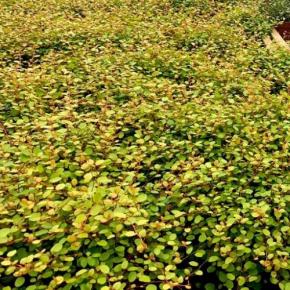
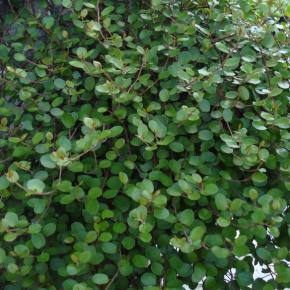
Muehlenbeckia astonii, also known as Wirebush or Shrubby Tororaro, is a rare and distinctive shrub native to New Zealand. Its intricate, wiry, reddish-brown branch network and small, deciduous leaves give it a unique architectural appearance, ideal for structural planting. Extremely hardy and tolerant to drought, it thrives in challenging coastal or poor-soil environments.
|
Packaging
To find out more about our packaging, please visit our young plants' page available from the website header.

|
Available quantity | Dispo à partir de | Sold by | Desired quantity | |
|---|---|---|---|---|---|
|
Packaging
P28 A8
To find out more about our packaging, please visit our young plants' page available from the website header.
|
Available quantity 1566 | Dispo à partir de Immédiat | Sold by 28 |
|
|
|
Packaging
P24 A9
To find out more about our packaging, please visit our young plants' page available from the website header.
|
Available quantity 524 | Dispo à partir de Immédiat | Sold by 24 |
|
|
The characteristics of Muehlenbeckia astonii
Muehlenbeckia astonii is a slow-growing, deciduous shrub with a distinctive tangle of wiry, interlaced branches in reddish-brown tones. The foliage is small, rounded, and bright green, turning yellow before dropping in autumn. In late spring to summer, it produces small, cream-coloured flowers, followed by black berries. This species is notable for its extreme drought tolerance, coastal resilience, and ability to withstand poor or sandy soils. Its structural silhouette makes it particularly valuable in architectural landscaping projects or as a specimen plant for visual interest year-round.
How to use Muehlenbeckia astonii ?
Thanks to its intricate, sculptural branching, Muehlenbeckia astonii is well-suited for use as an ornamental specimen in both modern and naturalistic designs. It works effectively as a low-maintenance hedge, windbreak, or screening plant in coastal gardens. Its drought resistance makes it an excellent choice for xeriscaping or for planting in difficult sites with minimal irrigation. It can also be grown in large containers to highlight its architectural form. Combining it with contrasting foliage textures, such as grasses or bold-leaved shrubs, enhances its structural appeal.
Best practices for cultivating Muehlenbeckia astonii
Plant Muehlenbeckia astonii in well-drained soil, preferably sandy or gravelly, with a planting distance of 1–1.5 m for hedging. Choose a sunny location for optimal growth and dense branching. Minimal watering is required once established, but young plants benefit from regular moisture during the first growing season. Pruning can be performed in late winter to maintain shape or encourage density. Avoid over-fertilisation; a slow-release balanced fertiliser applied in spring is sufficient. Light cultivation of the soil around the base helps control weeds without disturbing the shallow root system.