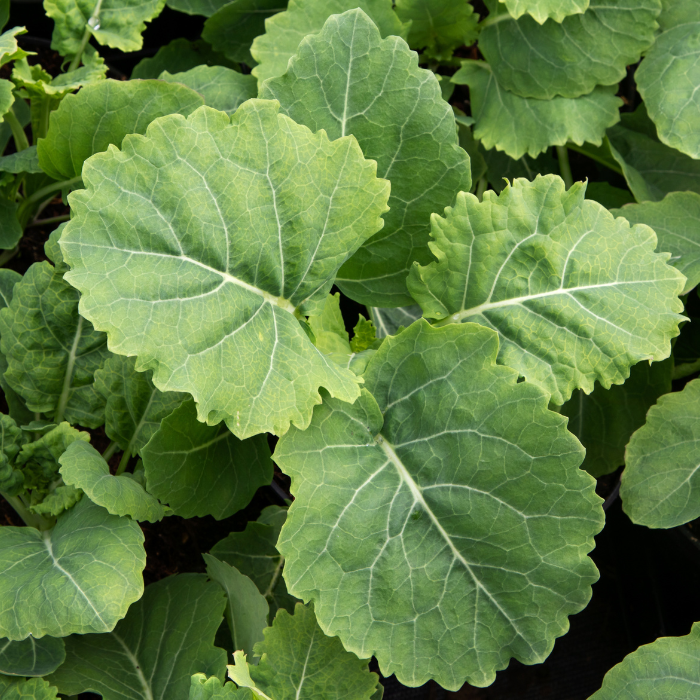
Brassica oleracea var. ramosa Daubenton’s Green is a heritage perennial kale cultivar selected for its vigorous, highly branched growth, continuous leaf production, and resilience in low-input systems. It is characterized by its non-heading habit, ability to provide edible shoots year-round under mild climates, excellent cold tolerance, and suitability for agroecological and perennial vegetable systems.
|
Packaging
To find out more about our packaging, please visit our young plants' page available from the website header.

|
Available quantity | Dispo à partir de | Sold by | Desired quantity | |
|---|---|---|---|---|---|
|
Packaging
GT9
To find out more about our packaging, please visit our young plants' page available from the website header.
|
Available quantity 135 | Dispo à partir de Immédiat | Sold by min 10 |
|
|
Characteristics of Brassica oleracea var. ramosa Daubenton’s Green
Brassica oleracea var. ramosa Daubenton’s Green is a non-heading, long-lived kale cultivar developed for regular leaf production throughout the year. Unlike traditional cabbages, it forms a dense rosette or low shrub structure with vigorous side-shoot development, making it ideal for continual harvesting. It is remarkably cold-hardy and tolerant of a wide range of soil types, including heavy and poorly drained ones. Its perennial habit offers long-term productivity with minimal soil disturbance, making it a strong candidate for low-input market gardening, permaculture, or forest garden systems.
How to use Brassica oleracea var. ramosa Daubenton’s Green ?
This perennial kale fits seamlessly into permanent vegetable systems: as a border crop, in long-term rotations, or as a core element in agroforestry and sustainable food production systems. Its moderate spread and longevity make it well-suited for perennial beds, edible landscaping, and even semi-shaded zones. In commercial setups, it supports repeated leaf harvesting over several years, reducing replanting needs and labour costs. Whether planted in rows or as individual specimens, it ensures consistent leafy yield across seasons in temperate climates.
Tips for successfully growing Brassica oleracea var. ramosa Daubenton’s Green
Plant in deep, fertile, moist but well-drained soil, preferably slightly acidic to neutral (though it tolerates a broad pH range). Position in full sun for optimal yield, though light shade is tolerated. Spacing of 50 to 100 cm is recommended depending on planting design. Apply organic compost or balanced fertilizer at planting. Mulch to conserve moisture and suppress weeds. Regular watering during establishment improves root development; once established, the plant is tolerant of moderate drought. Harvesting young shoots encourages dense regrowth and prolongs productivity. Although generally pest-resistant, basic monitoring is advised. Its low maintenance and perennial nature offer strong advantages in reducing labour and input costs for professional growers.