Caryopteris Pavilion Pink® – Compact, floriferous, and pollinator-friendly
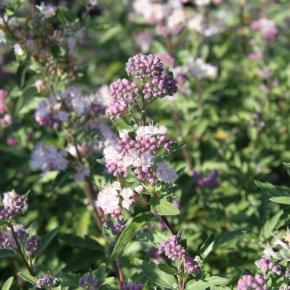
Native to East Asia, Caryopteris Pavilion Pink® is a compact, deciduous shrub renowned for its late-season pastel-pink blooms, a rare hue among Caryopteris. Its dense, rounded habit, fine aromatic foliage, and excellent drought tolerance make it a premium choice for ornamental and ecological plantings.
|
Packaging
To find out more about our packaging, please visit our young plants' page available from the website header.

|
Available quantity | Dispo à partir de | Sold by | Desired quantity | |
|---|---|---|---|---|---|
|
Le stock n'est actuellement pas disponible pour ce produit. |
|||||
Characteristics of Caryopteris Pavilion Pink®
Caryopteris Pavilion Pink® distinguishes itself by its unique pink flowers, a departure from the traditional blue tones of the genus. Its fine, aromatic, grey-green foliage contrasts beautifully with the soft blooms, creating a refined ornamental effect. Blooming from late summer into autumn, it provides crucial nectar for bees and butterflies when other floral resources are scarce. Hardy down to -15°C, it thrives in sunny, well-drained locations and maintains a compact, rounded shape without excessive pruning.
How to use Caryopteris Pavilion Pink® ?
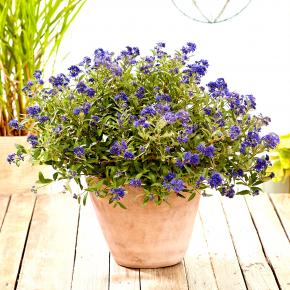
Due to its compact size and elegant appearance, Caryopteris Pavilion Pink® is ideal for borders, mixed shrub beds, and pollinator-friendly gardens. It performs equally well in containers for patios or terraces. Its late-season blooms make it an excellent companion to summer-flowering perennials, while its aromatic foliage enhances sensory gardens. In mass plantings, it creates harmonious colour palettes and attracts beneficial insects, supporting biodiversity in both private and public landscapes.
Cultivation guidelines for Caryopteris Pavilion Pink®
Plant Caryopteris Pavilion Pink® in light, well-drained soil, preferably sandy or loamy, with a neutral to slightly alkaline pH. Space plants approximately 60 cm apart for optimal airflow and shape development. Water regularly during the establishment phase, then reduce as drought tolerance develops. Prune hard in late winter or early spring to encourage vigorous regrowth and abundant flowering. A balanced, slow-release fertiliser applied in spring will enhance bloom density. Avoid poorly drained sites to prevent root rot.