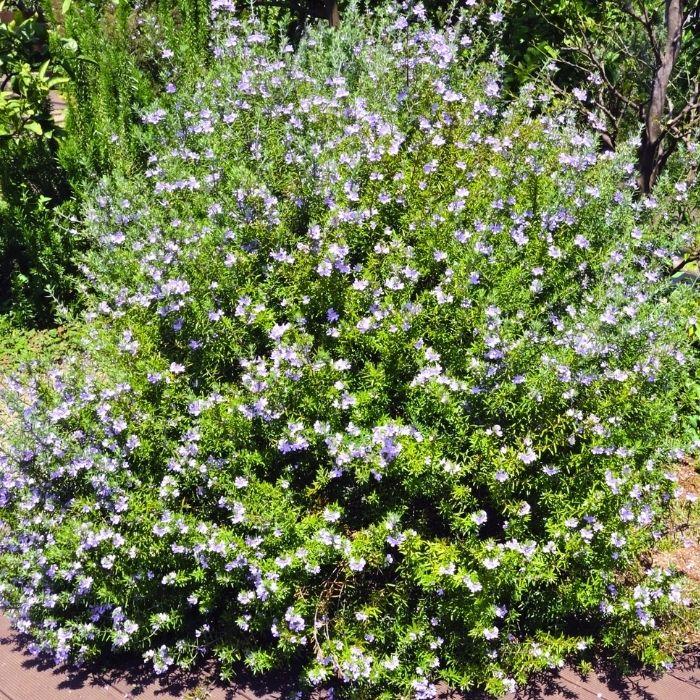
Westringia fruticosa Blue Armor is a compact, coastal-tolerant shrub native to Australia, valued for its fine, silvery-grey foliage and profuse pale blue flowers. Unlike many similar hedge plants, it offers year-round foliage appeal, drought resistance, and exceptional tolerance to salt spray, making it ideal for seaside landscapes and low-maintenance gardens.
|
Packaging
To find out more about our packaging, please visit our young plants' page available from the website header.

|
Available quantity | Dispo à partir de | Sold by | Desired quantity | |
|---|---|---|---|---|---|
|
Packaging
GT9
To find out more about our packaging, please visit our young plants' page available from the website header.
|
Available quantity 1382 | Dispo à partir de 11/2026 | Sold by min 10 |
|
|
Characteristics of Westringia fruticosa Blue Armor
Native to the coastal regions of Australia, Westringia fruticosa Blue Armor is a compact, evergreen shrub renowned for its neat, rounded habit and dense branching structure. Its linear, silvery-green leaves create a fine-textured appearance, complemented by soft blue flowers that emerge in abundance from spring through autumn. Highly resistant to salt spray, drought, and pruning stress, this cultivar excels in challenging environments, including sandy and nutrient-poor soils.
How to use Westringia fruticosa Blue Armor ?
This shrub Westringia fruticosa Blue Armor is a perfect fit for coastal gardens, low-maintenance landscapes, and urban plantings. It works exceptionally well as a clipped hedge, a windbreak, or a mass planting for ground coverage. In container culture, it maintains a tidy shape and provides year-round colour. Its tolerance to pruning makes it ideal for topiary and formal garden designs, while its natural resilience suits wildlife-friendly and xeriscape projects.
Cultivation tips for Westringia fruticosa Blue Armor
Plant Westringia fruticosa Blue Armor in well-drained soil, preferably sandy or loamy, with a neutral to slightly alkaline pH. Space plants 80–100 cm apart for hedge formation. Water regularly during establishment, then reduce irrigation as the plant becomes drought-tolerant. Prune lightly two to three times per year to maintain density and form. Apply a slow-release, low-phosphorus fertiliser in spring to encourage healthy growth and prolific flowering.