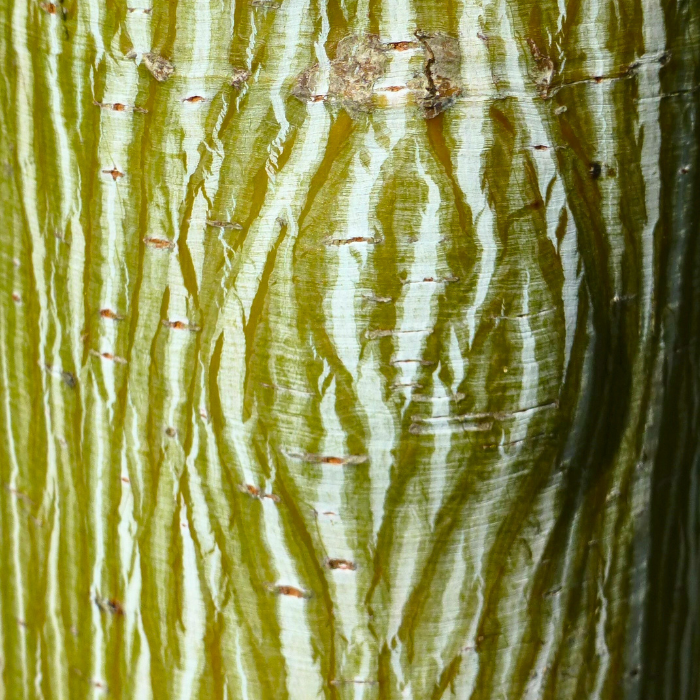

Acer davidii, also known as the Père David’s Maple, stands out with its distinctive green bark streaked with white, resembling snake skin. This small deciduous tree brings visual interest year-round, especially in winter. Fast-growing and highly ornamental, it's perfect for structured gardens or collector’s arboretums. Its broad crown, yellow autumn foliage, and smooth bark add strong seasonal value.
|
Packaging
To find out more about our packaging, please visit our young plants' page available from the website header.

|
Available quantity | Dispo à partir de | Sold by | Desired quantity | |
|---|---|---|---|---|---|
|
Packaging
POT 11x11x15
To find out more about our packaging, please visit our young plants' page available from the website header.
|
Available quantity 286 | Dispo à partir de Immédiat | Sold by min 10 |
|
|
|
Packaging
POT 11x11x15
To find out more about our packaging, please visit our young plants' page available from the website header.
|
Available quantity 44 | Dispo à partir de Immédiat | Sold by min 10 |
|
|
Characteristics of Acer davidii
Acer davidii, originating from the mountainous forests of China, belongs to the snakebark group of maples. Its most distinctive feature is its smooth, olive-green bark streaked with silvery white, offering high ornamental value especially in winter. It has an upright, branched structure and a deciduous foliage that shifts from green to vibrant yellow or orange in fall. This species is cold-hardy, tolerating temperatures down to -25°C. It produces discreet but nectar-rich flowers in spring, arranged in yellow-green racemes.
How to use Acer davidii?
Acer davidii is highly recommended for ornamental gardens, parks, and landscaped areas where its bark can be appreciated, particularly during the dormant season. It performs best when planted as a specimen tree to highlight its architectural shape. It can also be used as a backdrop in shrub borders or at the edge of light woodlands. Though less common, it may be grown in large containers for patios in protected settings. It pairs well with flowering shrubs or evergreen foliage plants that contrast with its seasonal interest.
Tips for successfully growing Acer davidii
Acer davidii thrives in moist, humus-rich, well-drained soil with a slightly acidic to neutral pH. Planting is best done in autumn or spring, allowing for at least 4 meters of space in all directions. Avoid hot, dry exposures and drying winds. Apply organic mulch to retain soil moisture. Regular watering is essential in the first few years. Pruning is generally unnecessary, except to shape the crown in late winter. A balanced spring fertilizer can support healthy growth without encouraging excessive vigor.