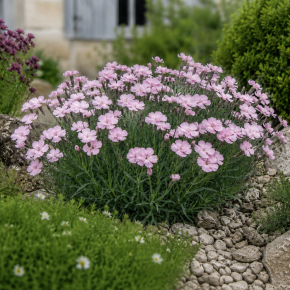
Compact, floriferous, and pollinator-friendly, Nepeta nervosa Pink Cat stands out with its soft pink blooms—a rare hue among catmints. Native to Central Asia, this low-growing perennial forms a dense, aromatic mound and thrives in dry, sunny sites. Its neat habit and drought resistance make it a top choice for professionals seeking resilient groundcover solutions.
|
Packaging
To find out more about our packaging, please visit our young plants' page available from the website header.

|
Available quantity | Dispo à partir de | Sold by | Desired quantity | |
|---|---|---|---|---|---|
|
Le stock n'est actuellement pas disponible pour ce produit. |
|||||
Characteristics of Nepeta nervosa Pink Cat
Originating from the mountainous regions of Central Asia, Nepeta nervosa Pink Cat is a compact herbaceous perennial with a cushion-like habit. It produces aromatic grey-green foliage and unusually soft pink flowers from early summer into autumn. Exceptionally hardy (down to -20 °C), this variety reaches just 25 cm in height, making it ideal for edging, rock gardens, or mixed perennial beds. Its long-lasting bloom period also attracts pollinators, particularly bees and butterflies, contributing to ecological plantings.
How to Use Nepeta nervosa Pink Cat ?
Thanks to its small size and tidy habit, Nepeta nervosa Pink Cat is perfectly suited for rockeries, containers, raised beds, and borders. It functions effectively as a groundcover to suppress weeds and stabilize dry soils. In mixed plantings, it adds delicate color contrast against bold-hued perennials or ornamental grasses. This variety is particularly valued in low-maintenance, drought-tolerant schemes and compact urban gardens, including rooftop installations and balcony planters.
Best Practices for Growing Nepeta nervosa Pink Cat ?
Nepeta nervosa Pink Cat thrives in well-drained, light soils—sandy or gravelly substrates are ideal. Plant in spring or autumn, spacing 30 cm between plants. It requires full sun exposure to perform optimally. Once established, it is highly drought-tolerant and requires minimal watering. A light trim after the initial flowering can encourage a second flush. No fertilization is needed. Remove spent foliage in late winter to prepare for vigorous spring regrowth.