Akebia quinata Shirobana, native to China, Korea and Japan, is a vigorous woody climber commonly known as the five-leaf akebia. It differs from the typical species through its creamy-white flowers with mauve centres, rather than chocolate-purple blooms. Their spicy, vanilla-like fragrance, elegant foliage and rapid growth make this cultivar a particularly ornamental climbing plant.
|
Packaging
To find out more about our packaging, please visit our young plants' page available from the website header.

|
Available quantity | Dispo à partir de | Sold by | Desired quantity | |
|---|---|---|---|---|---|
|
Packaging
GT9
To find out more about our packaging, please visit our young plants' page available from the website header.
|
Available quantity 92 | Dispo à partir de Immédiat | Sold by min 10 |
|
|
Characteristics of Akebia quinata Shirobana
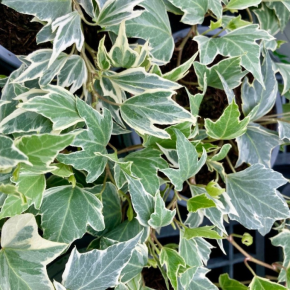
Akebia quinata ‘Shirobana’ produces long, woody, twining stems capable of rapidly covering a support. Its semi-evergreen foliage consists of palmate leaves formed by five oval, dark green leaflets, which may develop purple tones in winter. In spring, hanging clusters of creamy-white flowers appear, lightly tinged with mauve at the centre and pleasantly fragrant. This pale flowering is its main distinguishing feature compared with the standard five-leaf akebia, which produces brownish-purple flowers. Elongated fruits may develop when another genetically distinct cultivar is planted nearby to ensure cross-pollination.
How to use Akebia quinata Shirobana ?
This climber is particularly suitable for quickly covering pergolas, arbours, arches, fences and walls fitted with strong wires or trellis systems. Its dense growth can also create a seasonal privacy screen or conceal an unattractive structure. It may be combined with clematis or climbing roses to extend the overall flowering season. Growing it in a large container is also possible on a terrace, provided that a deep pot, fertile growing medium and sturdy support are supplied. Due to its vigour, this cultivar should be planted where its development can be monitored and controlled.
How to successfully grow Akebia quinata Shirobana ?
Plant Akebia quinata ‘Shirobana’ in spring or autumn in fertile, humus-rich, moist but well-drained soil. It tolerates clay, loam, sandy and calcareous soils, as well as a broad range of pH levels. Allow approximately 2 to 3 metres between plants and train the stems onto a strong support immediately after planting. Water regularly during the first two years, then mainly during dry periods. An organic mulch will help retain soil moisture. Prune after flowering or in late winter to remove tangled stems and control growth. An annual application of well-rotted compost will support vigorous growth and flowering.