Allium fistulosum Commune Rouge, native to Asia, is a perennial aromatic plant commonly known as red Welsh onion or red bunching onion. It differs from the standard Welsh onion through its elongated base wrapped in a reddish-purple skin. Thicker than chives and milder than common onion, it produces hollow, fleshy leaves that regrow regularly after cutting.
|
Packaging
To find out more about our packaging, please visit our young plants' page available from the website header.

|
Available quantity | Dispo à partir de | Sold by | Desired quantity | |
|---|---|---|---|---|---|
|
Le stock n'est actuellement pas disponible pour ce produit. |
|||||
Characteristics of Allium fistulosum Commune Rouge
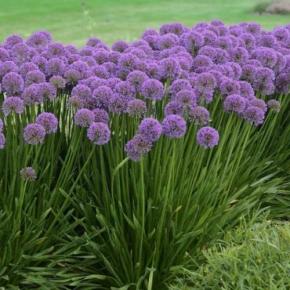
Allium fistulosum ‘Commune Rouge’ forms a dense clump of cylindrical, hollow and fleshy leaves that are broader than those of chives. Its base does not develop into a rounded bulb like that of the common onion, but instead forms an elongated swelling enclosed in a red to purple skin. Its onion flavour remains milder and fresher than that of a standard bulb onion. From the second year onwards, hollow stalks carry spherical umbels of small white flowers attractive to pollinators. The foliage may die back in winter before regrowing from the crown in spring.
How to use Allium fistulosum Commune Rouge ?
Red Welsh onion is suitable for vegetable gardens, herb beds, edible borders and permaculture systems. Its leaves and swollen bases can be harvested gradually to flavour salads, raw vegetable dishes, omelettes, soups, sauces and stir-fries. Regular harvesting encourages the production of new leaves. Its reddish-purple colouring also adds visual interest to edible and aromatic plantings. It is well suited to container cultivation on terraces and balconies, provided that a deep, well-drained pot is used. In commercial production, it is a valuable perennial herb for sale as a fresh-cut crop or potted plant.
How to successfully grow Allium fistulosum Commune Rouge ?
Plant red Welsh onion in spring or autumn in loose, fertile, moisture-retentive but well-drained soil. Allow approximately 35 to 40 cm between plants so that the clumps can expand. Water regularly after planting and during dry periods, without allowing the soil to remain waterlogged. Mulching limits weed growth and helps retain moisture. Incorporate mature compost at planting, followed by a light application each spring. Cut the leaves a few centimetres above ground level to encourage regrowth. Remove the flower stalks when leaf production is the priority, and divide ageing clumps every three to four years.