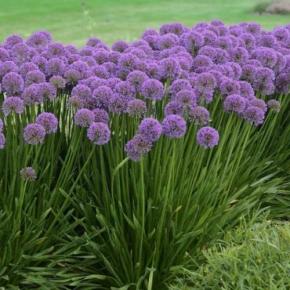
Native to Europe and Western Asia, Allium scorodoprasum, commonly known as rocambole garlic, is an edible bulbous perennial distinguished by its purple aerial bulbils. More unusual than common garlic, it provides several harvestable parts: leaves, cloves and bulbils. Its perennial growth habit, excellent hardiness and easy vegetative propagation make it particularly suitable for diversified vegetable gardens and heritage vegetable ranges.
|
Packaging
To find out more about our packaging, please visit our young plants' page available from the website header.

|
Available quantity | Dispo à partir de | Sold by | Desired quantity | |
|---|---|---|---|---|---|
|
Packaging
GT9
To find out more about our packaging, please visit our young plants' page available from the website header.
|
Available quantity 1300 | Dispo à partir de 05/2027 | Sold by min 10 |
|
|
Characteristics of Allium scorodoprasum
Allium scorodoprasum is a perennial geophyte forming a clump of linear, flat and slightly arching leaves with a characteristic garlic scent. In early summer, upright flower stalks bear purple umbels containing both flowers and aerial bulbils. The production of these bulbils is its main distinguishing feature and makes propagation particularly straightforward. The foliage gradually turns yellow and dies back around flowering time. The underground bulbs consist of several strongly flavoured cloves, while the aerial bulbils can also be eaten or used as propagation material. This robust, pollinator-friendly plant is generally not very susceptible to pests.
How to use Allium scorodoprasum
Rocambole garlic is primarily used in vegetable gardens, perennial vegetable collections, herb gardens and areas dedicated to heritage crops. It can be planted in rows, in small cultivation beds or along the edges of raised vegetable plots. Its upright habit and purple umbels also make it suitable for edible or naturalistic borders. Container cultivation is possible in a deep pot with excellent drainage. Young leaves can be used as a seasoning, while the cloves and aerial bulbils are harvested for their distinctive garlic flavour. The flower heads also provide a valuable source of nectar for pollinating insects.
How to grow Allium scorodoprasum successfully
Plant Allium scorodoprasum in full sun, in fertile, loose and, above all, well-drained soil. In heavy clay soils, incorporate coarse sand or gravel to reduce excess winter moisture. Plant the cloves or bulbils approximately 5 cm deep, allowing 15 to 20 cm between plants and 30 cm between rows. Water after planting, then only during prolonged dry periods. Keep the soil free of weeds by shallow hoeing to avoid damaging the bulbs. A moderate application of mature compost in autumn or early spring is sufficient. No pruning is required; simply remove the dry flower stalks after harvesting the bulbils.