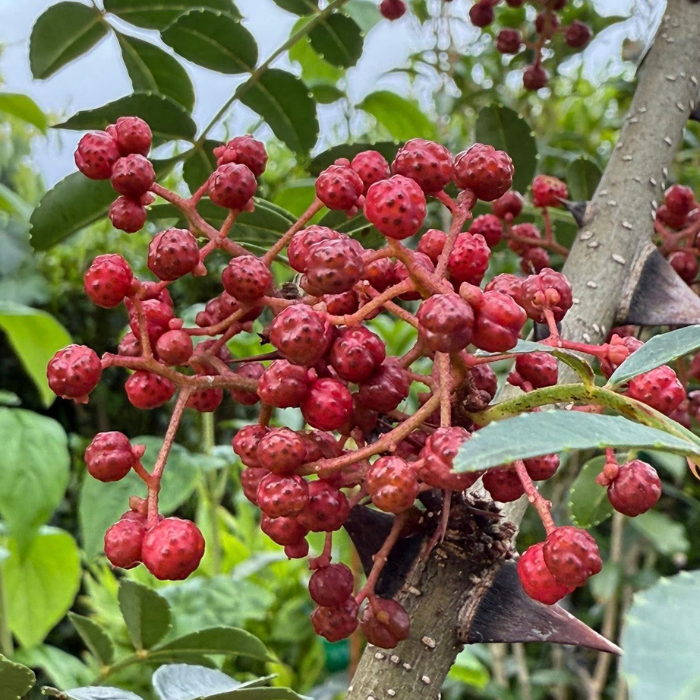
Zanthoxylum bungeanum, native to China, is a deciduous shrub or small tree in the Rutaceae family, commonly known as Sichuan pepper. It stands out for its highly aromatic compound foliage, thorny branches and especially its reddish-brown fruits, whose pericarp is used as a spice. It therefore combines ornamental value, aromatic foliage and the production of distinctive edible husks.
|
Packaging
To find out more about our packaging, please visit our young plants' page available from the website header.

|
Available quantity | Dispo à partir de | Sold by | Desired quantity | |
|---|---|---|---|---|---|
|
Packaging
GT9
To find out more about our packaging, please visit our young plants' page available from the website header.
|
Available quantity 110 | Dispo à partir de 03/2027 | Sold by min 10 |
|
|
Characteristics of Zanthoxylum bungeanum
Zanthoxylum bungeanum forms a vigorous shrub approximately 4 m high, with dense, thorny branching. Its deciduous foliage consists of compound leaves made up of small green leaflets that release a distinctive aroma when crushed. Small greenish-yellow flowers appear in spring and are followed by fruits that turn reddish-brown as they mature, eventually splitting open to reveal black seeds. The aromatic outer husk of the fruit, rather than the seed itself, is used as Sichuan pepper. The species has good cold tolerance in well-drained soil, with hardiness generally around -15 °C.
How to use Zanthoxylum bungeanum?
Zanthoxylum bungeanum is particularly well suited to aromatic and edible gardens, as its fruit husks can be harvested and used as a condiment. Its bushy habit and colourful fruiting also make it suitable for mixed shrub borders, informal hedges or specimen planting. Its thorny branches can contribute to the formation of a defensive hedge. It is advisable to keep it away from frequently used paths and play areas because of the thorns. Growing in a large container is possible for younger plants, but open-ground cultivation is better suited to its long-term development.
What are the best cultivation practices for Zanthoxylum bungeanum?
Plant Zanthoxylum bungeanum in full sun or partial shade, in fertile, loose and well-drained soil. A sunny position generally promotes better fruit production. For hedge planting, allow approximately 1.5 to 2 m between plants; for specimen planting, provide more space for full development. Water regularly after planting to support establishment, then irrigate during prolonged dry periods when necessary. Avoid stagnant moisture, especially in winter. Pruning is mainly used to remove dead wood, balance the framework and make harvesting easier. An application of mature compost in spring can support growth and fruit production.