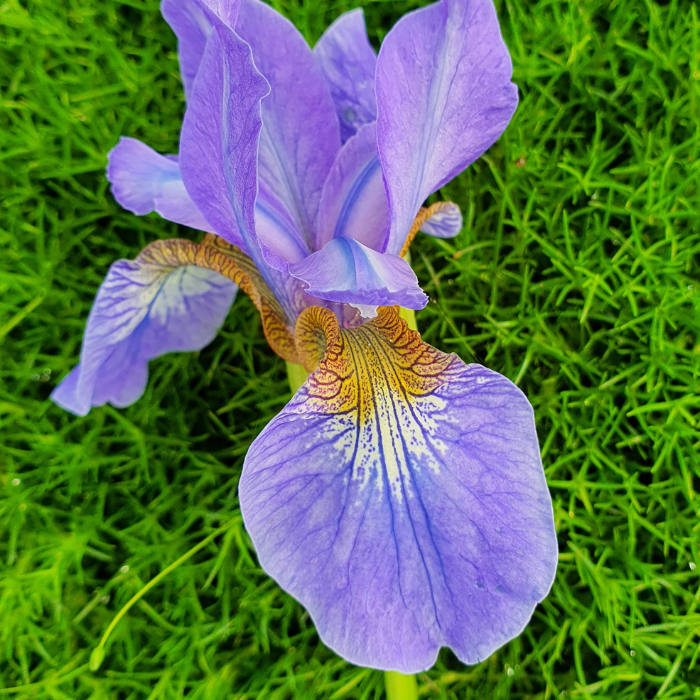
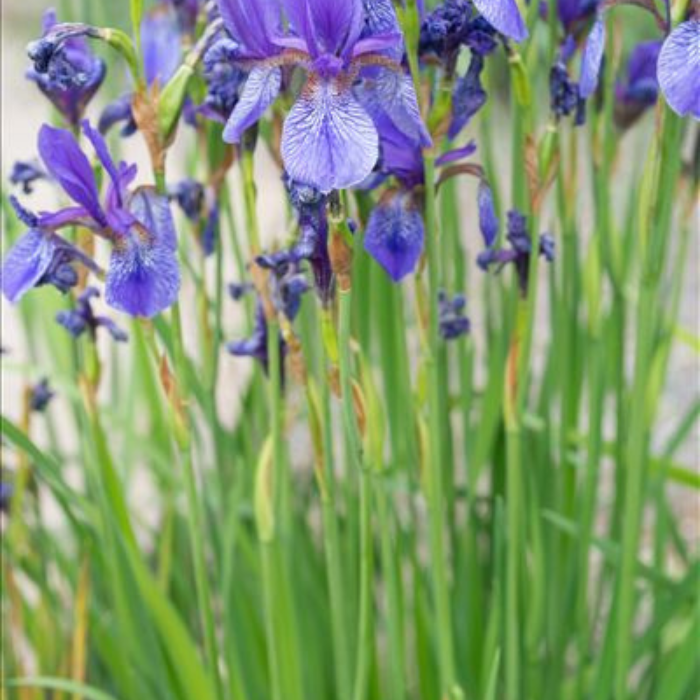
Iris sibirica, native to Central and Eastern Europe through to temperate Asia, is a rhizomatous perennial valued for its upright habit and elegant flowering. Siberian iris differs from bearded irises through its finer foliage, beardless flowers and good adaptation to soils that remain moist. Its architectural clump also retains ornamental interest after flowering.
|
Packaging
To find out more about our packaging, please visit our young plants' page available from the website header.

|
Available quantity | Dispo à partir de | Sold by | Desired quantity | |
|---|---|---|---|---|---|
|
Packaging
GT9
To find out more about our packaging, please visit our young plants' page available from the website header.
|
Available quantity 100 | Dispo à partir de Immédiat | Sold by min 10 |
|
|
Characteristics of Iris sibirica
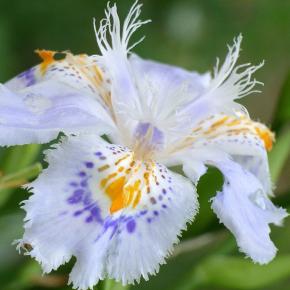
Iris sibirica forms a dense, upright clump of long, narrow and slightly arching leaves, with a grass-like appearance. In spring, slender flower stems rise above the foliage and carry refined flowers, typically violet-blue in the species. Unlike bearded irises, the flowers do not have the characteristic beard on the falls. The plant reaches approximately 80 cm in height and 50 cm in width at maturity. Its deciduous foliage turns yellow and gradually dies back in autumn. Its hardiness makes it suitable for cultivation in many regions with cold winters.
How to use Iris sibirica?
Iris sibirica is well suited to perennial borders, mixed beds and planting schemes in soils that remain moist. It is particularly effective near ponds and water features, provided that the crown is not permanently submerged. Its upright habit helps structure planting schemes without creating an overly bulky mass. It can be planted in groups to strengthen the visual impact of both foliage and flowers. Siberian iris combines well with astilbes, hostas, ferns and ornamental grasses suited to similar growing conditions. Cultivation in a large container is also possible, provided watering is monitored regularly.
What are the best growing tips for Iris sibirica?
Plant Iris sibirica in full sun or partial shade, in deep, fertile soil that retains some moisture during the growing season. Allow approximately 40 to 50 cm between plants. Water regularly after planting to encourage rhizome establishment, and maintain sufficient moisture in spring and summer, especially during dry periods. Avoid soils that remain waterlogged and poorly aerated for long periods. Remove spent flower stems after flowering if seed production is not required, then clear away dried foliage in late autumn or at the end of winter. An application of well-rotted compost in spring supports healthy new growth.