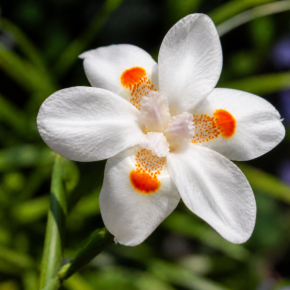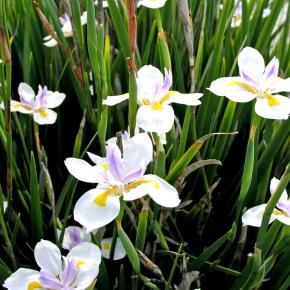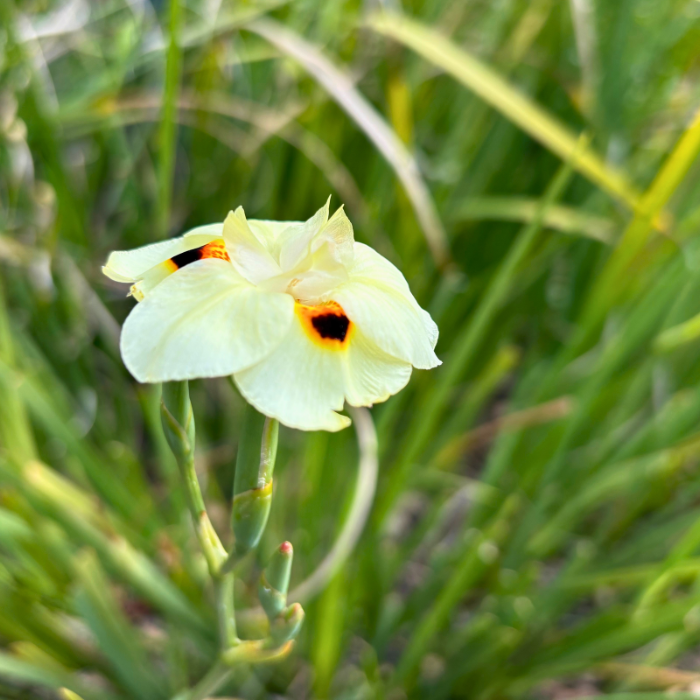
Native to South Africa, Dietes bicolor, commonly known as African iris or yellow wild iris, is a rhizomatous perennial forming an architectural clump of long, narrow, evergreen leaves. It differs from other Dietes through its pale yellow flowers marked with brown-violet spots, produced successively throughout the warmer months. Its upright habit and strap-like foliage make it suitable for borders, mass plantings and container cultivation in mild climates.
|
Packaging
To find out more about our packaging, please visit our young plants' page available from the website header.

|
Available quantity | Dispo à partir de | Sold by | Desired quantity | |
|---|---|---|---|---|---|
|
Packaging
POT11
To find out more about our packaging, please visit our young plants' page available from the website header.
|
Available quantity 766 | Dispo à partir de Immédiat | Sold by min 10 |
|
|
|
Packaging
POT11
To find out more about our packaging, please visit our young plants' page available from the website header.
|
Available quantity 418 | Dispo à partir de Immédiat | Sold by min 10 |
|
|
Characteristics of Dietes bicolor
Dietes bicolor develops from rhizomes into a dense clump of evergreen, narrow, upright, strap-like leaves that can reach around 80 cm in height. Branched flower stems emerge above the foliage and carry successive cream-yellow to pale yellow flowers, recognisable by their brown-violet markings surrounded by orange tones. Each individual flower is short-lived, but continuous renewal allows flowering to extend over several months when growing conditions are favourable. The plant maintains a strong vertical and architectural presence even outside the flowering period. Its moderate hardiness makes it best suited to open-ground cultivation in regions with mild winters or in sheltered microclimates.
How to use Dietes bicolor?
Dietes bicolor can be used in borders, mass plantings, group schemes or as a specimen plant, where its vertical foliage provides a strong structural effect. It is particularly suitable for contemporary, Mediterranean-style and exotic-inspired gardens. Repeated planting can create regular lines or uniform masses of foliage. It can also be planted near ponds in well-drained soil that remains periodically moist, provided the rhizome is not permanently submerged. In regions exposed to significant frost, growing it in a large container is a practical alternative, allowing the plant to be moved to a bright, frost-free location during the coldest periods.
What are the best cultivation tips for Dietes bicolor?
Plant Dietes bicolor in full sun or partial shade, in fertile, well-drained soil that remains moderately moist during the growing season. Allow approximately 50 to 60 cm between plants. Water regularly after planting to encourage root establishment, then adjust irrigation according to soil drying. Once established, it can tolerate dry periods, although regular water supply during active growth supports stronger development. Remove dry or damaged leaves at the base and cut out old flower stems if seed production is not required. A moderate application of compost or balanced fertiliser in spring can support new seasonal growth.