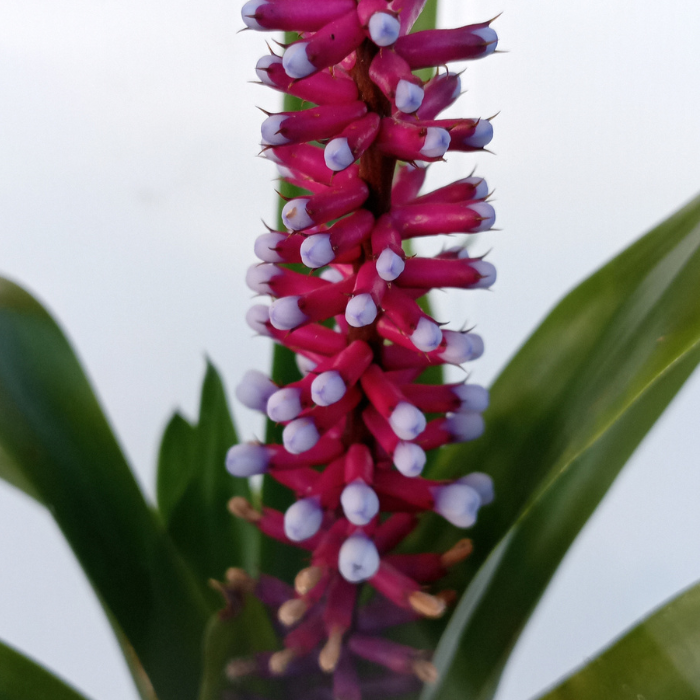
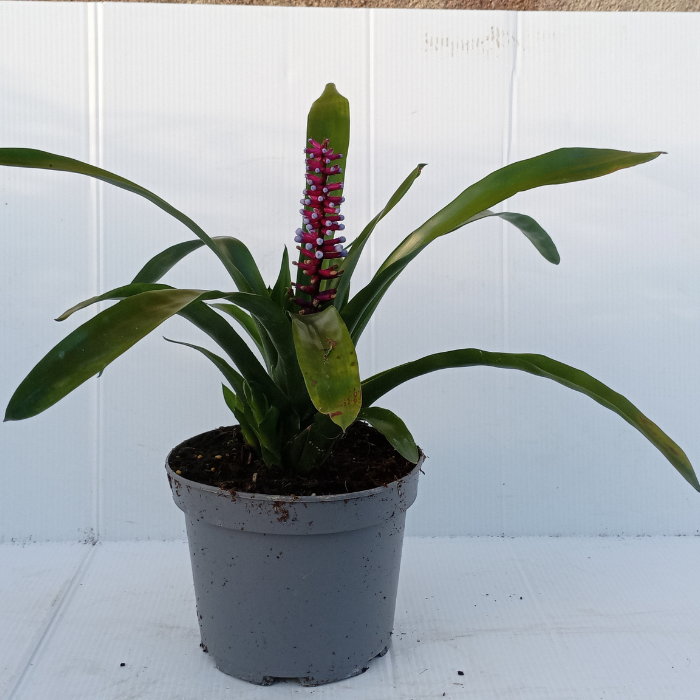
Aechmea gamosepala, an epiphytic bromeliad native to southern and south-eastern Brazil, is commonly known as the matchstick plant. It stands out for its flexible, almost spineless rosettes and highly graphic inflorescences: bright pink bracts support violet-blue flowers resembling coloured matchsticks. Its regular production of offsets quickly creates a dense, decorative and long-lasting clump.
|
Packaging
To find out more about our packaging, please visit our young plants' page available from the website header.

|
Available quantity | Dispo à partir de | Sold by | Desired quantity | |
|---|---|---|---|---|---|
|
Le stock n'est actuellement pas disponible pour ce produit. |
|||||
Characteristics of Aechmea gamosepala
Aechmea gamosepala belongs to the Bromeliaceae family. This evergreen perennial develops flexible, strap-shaped green leaves arranged in a water-holding rosette. Each rosette is monocarpic: it flowers only once, then gradually declines while producing several basal offsets that ensure the continuity of the clump. The upright inflorescence combines a bright pink stem and sepals with violet-blue petals. Naturally epiphytic, the species mainly uses its roots for anchorage. It requires warmth, filtered light and a relatively humid atmosphere.
How to use Aechmea gamosepala?
Aechmea gamosepala is mainly used as an indoor plant, in conservatories, heated greenhouses or winter gardens. Its compact habit is well suited to decorative pots, tropical displays and bright green walls. In tropical or subtropical regions, it can be planted in shaded beds, used as ground cover beneath trees or mounted on a trunk, branch or cork panel. Its almost spineless foliage makes it easier to use in frequently visited areas. It combines well with ferns, calatheas, philodendrons, anthuriums and other bromeliads requiring indirect light and a highly aerated substrate.
What advice ensures successful cultivation of Aechmea gamosepala?
Grow Aechmea gamosepala in a light, highly free-draining substrate made from fine bark, coconut fibre, peat or potting compost, and perlite. Heavy or clay soils must be avoided, as they encourage root rot. In containers, space rosettes approximately 30 to 40 cm apart. Keep a small amount of soft water in the centre of the rosette, renewing it regularly, and water the substrate moderately without saturating it. Apply a highly diluted fertiliser in spring and summer. Remove the mother rosette once it has completely dried and separate the offsets when they reach approximately one-third of its size.