FLOWER- CISTUS Albidus - LA FORET - Pépinière La Forêt
CISTUS Albidus - LA FORET - Pépinière La Forêt

CISTUS albidus

CISTE COTONNEUX

Cistus albidus (commonly called Grey‑Leaved Rock‑Rose or Ciste cotonneux) is a technically valuable, low‑growing evergreen shrub from the western Mediterranean, prized for its drought tolerance, silvery‑felted foliage and early spring flowers. This species stands out for professional horticulture thanks to its adaptability to dry, calcareous soils and its minimal maintenance requirements — an ideal choice for hot, sun‑exposed sites and Mediterranean‑style landscapes.

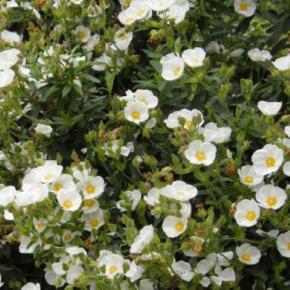
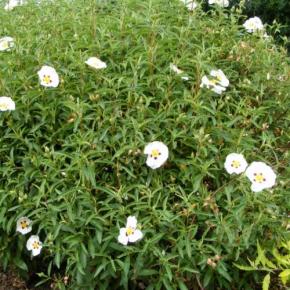
Approximately 0.5 to 1 m high × 0.5 to 1 m wide at maturity Compact, bushy, multi‑branched shrub
Evergreen (persistent) with dense felt‑covering hairs giving grey‑silvery appearance Pale green‑grey to silvery white
Full sun, ideally south‑facing or west‑facing
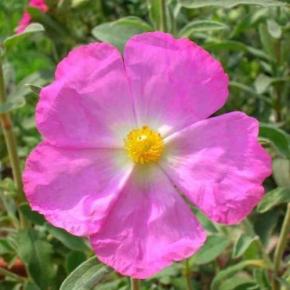
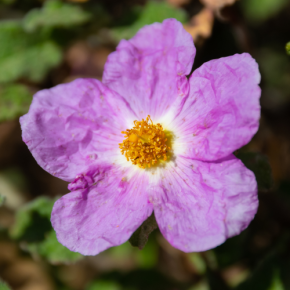
March to May Rose‑lilac petals with golden yellow centre; bowl‑shaped, papery texture
Moderate: hardy to approx. ‑10 °C to ‑15 °C in well‑drained conditions °C
Packaging
To find out more about our packaging, please visit our young plants' page available from the website header.
Available quantity Dispo à partir de Sold by Desired quantity
Packaging P28 A8
To find out more about our packaging, please visit our young plants' page available from the website header.
Available quantity 252 Dispo à partir de Immédiat Sold by 28

CHaracteristics of Cistus albidus

Cistus albidus is native to the western Mediterranean region where it naturally occupies rocky, calcareous maquis and garrigue ecosystems. It forms a low, dense shrub with grey‑felted evergreen leaves that reduce transpiration in hot, dry environments. The early spring bloom features showy rose‑lilac flowers that appear before many other shrubs, providing early pollen and ecological value. Its structural form, combined with high drought resistance and low nutrient requirement, make it a practical species for professional hard‑landscape or low‑input planting schemes.


How to use Cistus albidus ?

In professional horticulture and landscape design, Cistus albidus serves excellently in rock gardens, gravel beds, Mediterranean‑style plantings, coastal gardens or as under‑planting in dry slopes and low‐maintenance zones. Its compact size allows use in borders, ground‑covering shrub belts, erosion‑control on slopes or in storm‑resistant exposed sites. It performs particularly well in hot, sunny positions with minimal irrigation after establishment. It can also be used in large containers in appropriate substrates to provide accent foliage and early blossoms.


Growing tips for Cistus albidus ?

Select a site with full sun exposure and a substrate that is sharply drained—ideally sandy, rocky or calcareous rather than heavy clay. Prepare the planting hole with minimal organic amendment; avoid rich, water‑retentive soils that may lead to root‑rot. Space plants approximately 0.5 to 1 m apart depending on the effect desired. After planting, water competently until root establishment, then restrict irrigation to replicate its native dry‑summer habitat. Light pruning immediately after flowering helps maintain compact form—avoid hard pruning into old wood. Fertilization is generally unnecessary and may reduce its drought tolerance. For winter protection in colder climates, ensure excellent drainage and avoid water‑logged conditions during frost.


Plantes à découvrir