A fossil tree, highly architectural and resilient — ideal for urban settings and structured landscapes
Ginkgo biloba, also known as the maidenhair tree, is a living fossil species dating back to the Jurassic period. With its upright form, distinctive fan-shaped foliage, and exceptional resilience to urban and climatic stress, it is a preferred choice for sustainable landscaping — both as a specimen tree or in street alignments.
|
Packaging
To find out more about our packaging, please visit our young plants' page available from the website header.

|
Available quantity | Dispo à partir de | Sold by | Desired quantity | |
|---|---|---|---|---|---|
|
Packaging
AF350
To find out more about our packaging, please visit our young plants' page available from the website header.
|
Available quantity 380 | Dispo à partir de Immédiat | Sold by min 10 |
|
|
Characteristics of Ginkgo biloba
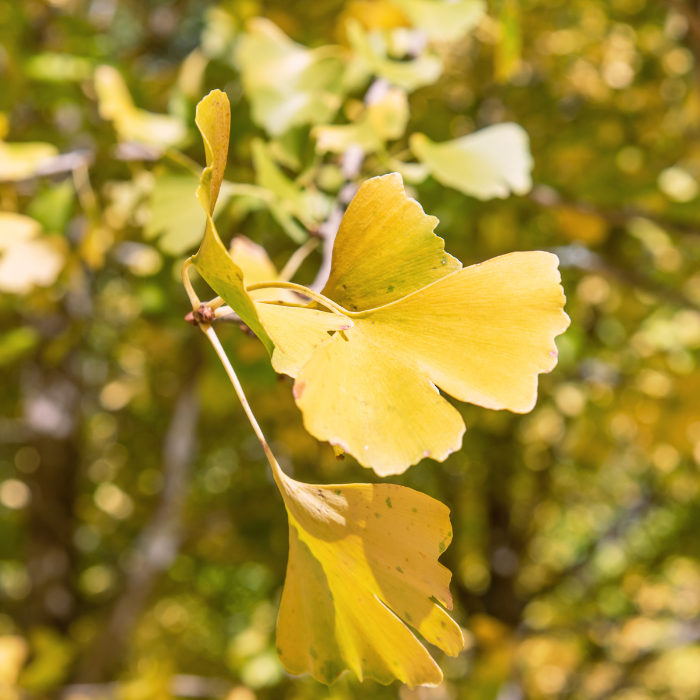
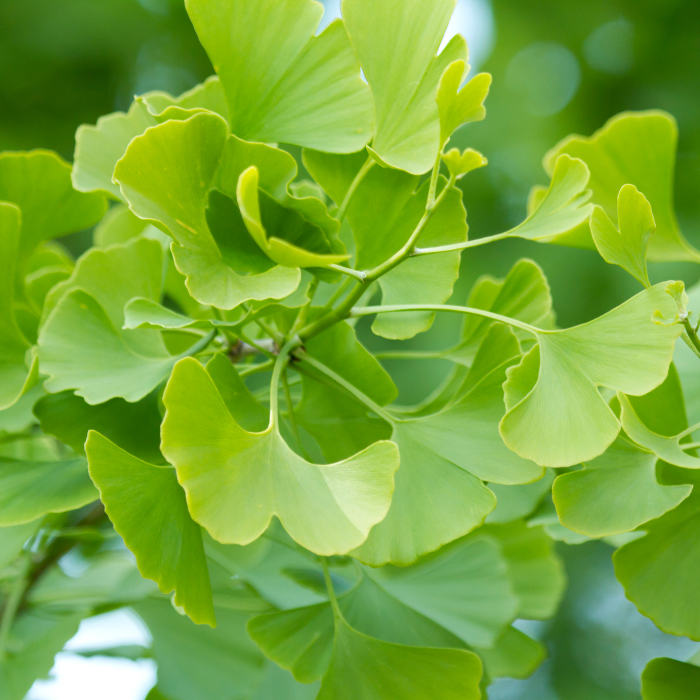
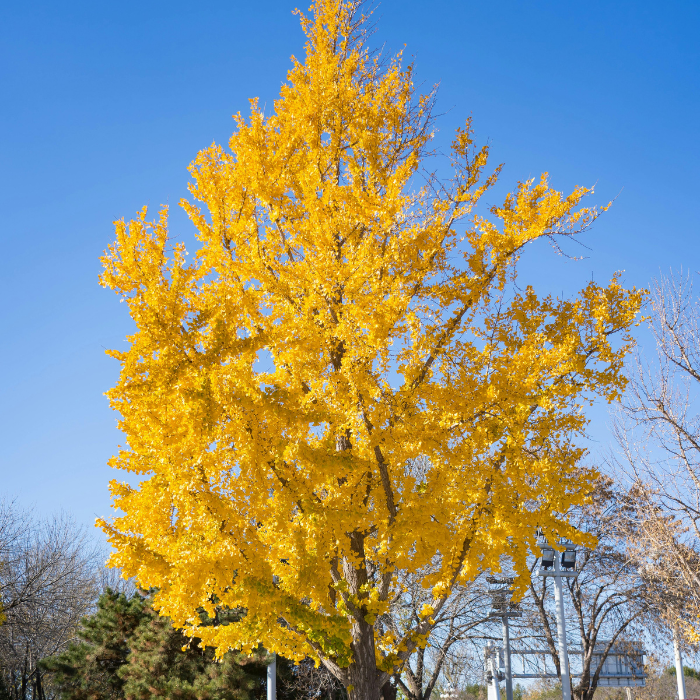
Ginkgo biloba is a deciduous tree renowned for its unique leaf shape, resilience, and evolutionary history. It initially grows with a narrow, upright crown that gradually broadens and becomes rounded with age. Being dioecious, only female specimens produce ovules, which emit an unpleasant odor when fertilized — hence, male clones are preferred for ornamental use. The light green leaves turn a spectacular golden yellow in autumn. Extremely tolerant of pollution, wind, diseases, and poor soils, it is among the most reliable species for difficult environments and urban landscapes.
How to use Ginkgo biloba ?
Ginkgo biloba is best used as a specimen tree, in avenue plantings, or as a structural feature in large gardens. Its strong tolerance to air pollution, drought, and compacted soils makes it ideal for urban areas. Its upright architecture allows it to be planted in narrow spaces, such as city streets or urban courtyards. It is also well suited to parks, public landscapes, and minimalist or Zen-inspired gardens. Because of its longevity, low maintenance, and robust form, it is widely used as a street tree in cities around the world.
Best practices for cultivating Ginkgo biloba
Ginkgo biloba performs best in deep, fresh, well-drained soils but tolerates a wide range of conditions, including dry, poor, or compacted substrates. Plant it in full sun to ensure optimal growth and vibrant fall coloration. For urban use, select male cultivars to avoid issues with the unpleasant-smelling fruits. In alignments, space trees 6 to 8 meters apart. Water regularly during the first two years to promote establishment; the tree becomes drought-tolerant once mature. It is pest- and disease-resistant and requires no routine pruning, except for formative training or deadwood removal.