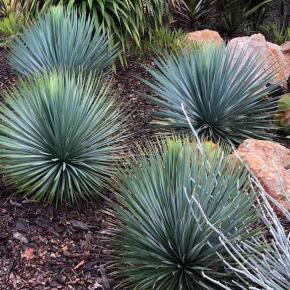
Yucca filamentosa Ivory Towers is a hardy, architectural perennial valued for its upright growth, striking sword-like variegated foliage, and tall panicles of creamy white flowers. Unlike many yuccas, it tolerates cold climates exceptionally well, making it ideal for both ornamental and structural planting schemes. Low maintenance and drought-resistant once established.
|
Packaging
To find out more about our packaging, please visit our young plants' page available from the website header.

|
Available quantity | Dispo à partir de | Sold by | Desired quantity | |
|---|---|---|---|---|---|
|
Packaging
GT9
To find out more about our packaging, please visit our young plants' page available from the website header.
|
Available quantity 1070 | Dispo à partir de Immédiat | Sold by min 10 |
|
|
Key characteristics of Yucca filamentosa Ivory Towers
Yucca filamentosa Ivory Towers, native to the southeastern United States, is a robust perennial with rigid, sword-shaped leaves edged in creamy white. This variegation provides year-round visual impact, complemented by filaments curling along the leaf margins. In midsummer, tall flower stalks rise above the foliage, bearing numerous bell-shaped creamy blooms. Its ability to thrive in poor soils, withstand drought, and resist pests makes it a dependable choice for professional landscaping projects.
How to use Yucca filamentosa Ivory Towers
Yucca filamentosa Ivory Towers's strong architectural form makes it suitable for modern gardens, rockeries, and xeriscaping. It excels as a focal point in mixed borders or container plantings, and its evergreen foliage ensures structural presence even in winter. In commercial landscapes, it can be grouped for mass effect or used in combination with gravel and stone features for a low-maintenance, water-wise design. Its resilience to heat, wind, and drought broadens its application range across various climates.
Cultivation guidelines for Yucca filamentosa Ivory Towers
Plant Yucca filamentosa Ivory Towers in well-drained, preferably sandy or gravelly soil with full sun exposure. Space plants 80–100 cm apart to accommodate mature spread. Minimal watering is required once established, though young plants benefit from occasional irrigation during prolonged dry periods. Pruning is limited to removing spent flower stalks and damaged leaves. Avoid heavy fertilisation, as excessive nutrients can reduce variegation intensity. Soil should remain loose and aerated to prevent root rot.