Allium ampeloprasum, native to the Mediterranean Basin, Eurasia and North Africa, is a perennial vegetable commonly known as perennial leek. Unlike the annual leek, it remains in place for several years and naturally multiplies by producing offsets. Its slender, tender and aromatic leaves are mainly harvested from autumn to spring, while the plant requires little maintenance and offers good cold resistance.
|
Packaging
To find out more about our packaging, please visit our young plants' page available from the website header.

|
Available quantity | Dispo à partir de | Sold by | Desired quantity | |
|---|---|---|---|---|---|
|
Packaging
GT9
To find out more about our packaging, please visit our young plants' page available from the website header.
|
Available quantity 600 | Dispo à partir de 05/2027 | Sold by min 10 |
|
|
|
Packaging
GT9
To find out more about our packaging, please visit our young plants' page available from the website header.
|
Available quantity 966 | Dispo à partir de Immédiat | Sold by min 10 |
|
|
Characteristics of Allium ampeloprasum
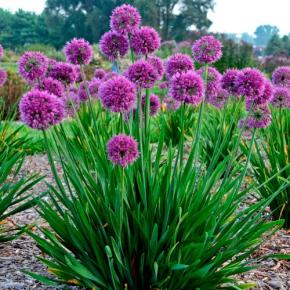
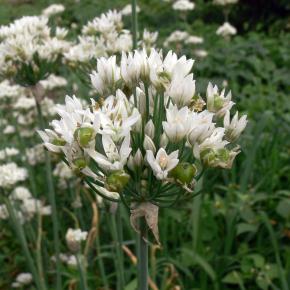
Allium ampeloprasum forms a perennial clump made up of several small, elongated bulbs. Its linear, flat, grey-green leaves have a milder flavour than those of the traditional leek. Growth generally emerges in autumn, develops throughout winter and spring, then gradually dies back during summer. A flowering stem may carry a large spherical umbel composed of numerous white, pink or purple flowers. Perennial leek is distinguished by its ability to produce for several years without resowing, thanks to the natural multiplication of its underground offsets.
How to use Allium ampeloprasum?
Perennial leek is mainly grown in vegetable gardens, edible landscapes and permaculture systems. Its leaves can be harvested as required and used in the same way as traditional leeks, in soups, sauces, omelettes and slow-cooked dishes. The young bulbs and flowers are also edible. Its clump-forming habit makes it suitable for planting along vegetable-bed edges, in raised beds or among perennial herbs. It can also be grown in a deep container, provided that the growing medium is fertile and well drained.
How to successfully grow Allium ampeloprasum?
Plant Allium ampeloprasum in spring or early autumn in loose, fertile and well-drained soil, preferably in full sun. In clay soils, incorporate compost and a drainage material to prevent excess moisture around the bulbs. Space plants 25 to 30 cm apart. Water after planting, then moderately during dry periods. An annual application of compost supports leaf production. Cut the leaves a few centimetres above ground level without disturbing the bulbs. Divide the clumps every three to four years to reduce congestion and maintain productivity.