Allium × proliferum, presented here under the commercial name Allium cepa var. viviparum, is a horticultural hybrid derived from the common onion and Welsh onion. Commonly known as the Egyptian walking onion, it is distinguished by the edible bulbils produced at the top of its flower stalks. Perennial, hardy and productive, it provides leaves, underground bulbs and aerial bulbils without requiring annual sowing.
|
Packaging
To find out more about our packaging, please visit our young plants' page available from the website header.

|
Available quantity | Dispo à partir de | Sold by | Desired quantity | |
|---|---|---|---|---|---|
|
Le stock n'est actuellement pas disponible pour ce produit. |
|||||
Characteristics of Allium cepa var. viviparum
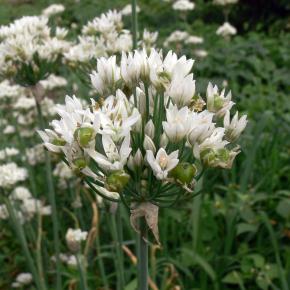
Allium cepa var. viviparum is a perennial bulbous plant forming a clump of cylindrical, hollow, grey-green leaves. Its rigid flower stalks can reach approximately one metre in height. Instead of producing only seeds, they bear clusters of aerial bulbils, which may themselves produce new shoots. This viviparous habit clearly distinguishes the Egyptian walking onion from conventional culinary onions. All parts have a pronounced onion flavour: the young leaves are used like spring onions, while the underground bulbs and aerial bulbils can be eaten raw, cooked or pickled.
How to use Allium cepa var. viviparum ?
The Egyptian walking onion is mainly suited to perennial vegetable gardens, edible landscapes and permaculture systems. It can be planted along the edge of vegetable beds, among aromatic plants or within an ornamental edible border. The leaves can be harvested gradually without completely exhausting the clump. The aerial bulbils are used like small onions or shallots, while the underground bulbs are also edible. It can also be grown in a deep container on a sunny terrace. Its architectural appearance and tiers of bulbils also provide decorative value in naturalistic or educational gardens.
How to successfully grow Allium cepa var. viviparum ?
Plant the bulbils in spring or autumn in loose, fertile and very well-drained soil, in a sunny position. Heavy soils should be improved with mature compost and a drainage material. Space plants 25 to 30 cm apart and plant the bulbils approximately 3 cm deep. Water regularly during establishment, then moderately, as excess moisture can cause rotting. Hoe the soil shallowly to reduce weed competition and maintain a light mulch. Apply compost in spring. Remove the stalks after harvesting the bulbils and divide congested clumps every three to four years.