Canna Géant Ibis – A Tropical Giant with Striking Flowers
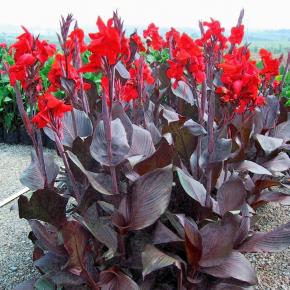
Canna Géant Ibis is a vigorous, large-flowering cultivar originating from South America, valued for its towering stature and intense red blooms. With its lush, banana-like foliage and long blooming season, it stands out as an architectural plant for gardens, borders, or large containers, bringing an unmistakable exotic touch.
|
Packaging
To find out more about our packaging, please visit our young plants' page available from the website header.

|
Available quantity | Dispo à partir de | Sold by | Desired quantity | |
|---|---|---|---|---|---|
|
Le stock n'est actuellement pas disponible pour ce produit. |
|||||
Characteristics of Canna Géant Ibis
Native to tropical and subtropical zones of South America, Canna Géant Ibis is a large herbaceous perennial renowned for its robust growth and spectacular flowers. Its broad, lush green leaves create a striking backdrop for vivid red blooms, which appear continuously from early summer to mid-autumn. This cultivar thrives in sunny, warm conditions, reaching heights of up to 1.8 m, making it a favourite for creating vertical interest in landscape compositions.
How to Use Canna Géant Ibis ?
Due to its imposing height and vibrant blooms, Canna Géant Ibis is ideal for use as a focal point in mixed borders, tropical-themed gardens, or as a backdrop for lower flowering plants. It also performs well in large containers for patios or terraces, where its architectural foliage and long-lasting flowers can be appreciated up close. In public or commercial landscapes, it can be planted in mass groupings for strong visual impact.
Cultivation Tips for Canna Géant Ibis
Plant Canna Géant Ibis in nutrient-rich, well-drained yet moisture-retentive soil, spaced approximately 50–60 cm apart. It requires regular watering during the growing season, especially in hot weather, and benefits from monthly fertilisation with a high-potash fertiliser to promote flowering. Remove spent blooms to encourage continuous flowering. In frost-prone areas, lift rhizomes in autumn, store them in a cool, dry, frost-free environment, and replant after the last frost in spring.