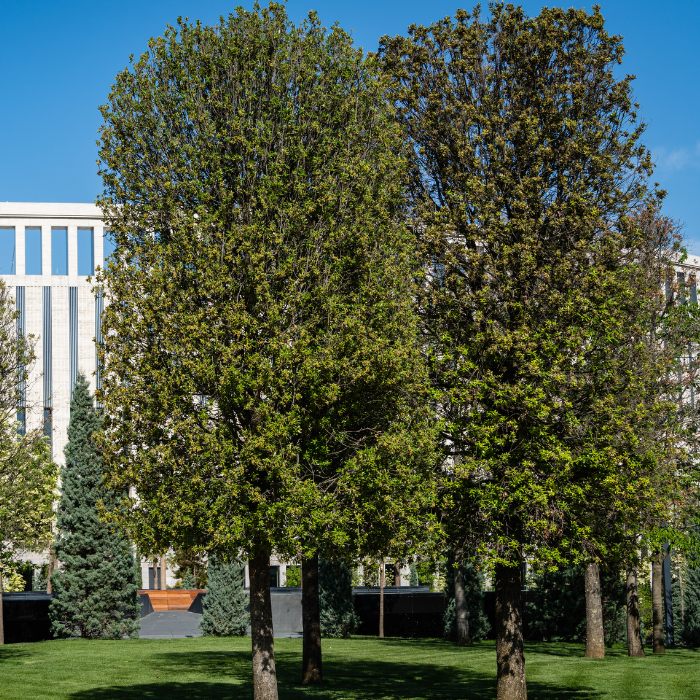
Mediterranean Evergreen Oak
Native to the Mediterranean basin, Quercus ilex is a hardy evergreen oak with leathery foliage, ideal for windbreak hedges or as a majestic specimen tree. Exceptionally drought-tolerant and resistant to salt spray and poor soils, it is a key choice for sustainable landscaping in dry or coastal climates.
|
Packaging
To find out more about our packaging, please visit our young plants' page available from the website header.

|
Available quantity | Dispo à partir de | Sold by | Desired quantity | |
|---|---|---|---|---|---|
|
Packaging
AF350
To find out more about our packaging, please visit our young plants' page available from the website header.
|
Available quantity 56 | Dispo à partir de Immédiat | Sold by 28 |
|
|
|
Packaging
AF350
To find out more about our packaging, please visit our young plants' page available from the website header.
|
Available quantity 442 | Dispo à partir de Immédiat | Sold by 28 |
|
|
Characteristics of Quercus ilex
Quercus ilex, commonly known as the Holm Oak, belongs to the Fagaceae family and retains its dense, evergreen foliage throughout the year. Its leathery, dark green leaves with a whitish underside reduce transpiration, making it exceptionally adapted to dry, windy environments. Once established, it withstands frost down to -15°C and thrives in poor, chalky, or coastal soils. With age, its naturally rounded form becomes broad and spreading, offering excellent landscape structure and shade.
How to Use Quercus ilex in Landscaping?
Quercus ilex offers versatile applications in professional landscaping. It performs well as a standalone specimen in parks due to its architectural shape, but also excels in evergreen hedging or windbreak roles in Mediterranean or coastal settings. Tolerant of regular pruning, it can be shaped as topiary or grown freely. In urban environments, it is suitable for container planting or roadside alignments, provided good drainage is ensured.
Cultivation Tips for Quercus ilex
Plant Quercus ilex in autumn or spring in deep, well-drained soils—preferably stony, sandy, or calcareous. A wide planting hole is recommended, with 4 to 6 meters spacing between trees when used as specimens or in rows. During establishment (first two years), water regularly. Once rooted, the tree becomes drought-resistant. Prune in late winter or summer depending on the desired shape. Fertilisation is minimal, though organic mulch helps retain soil moisture in dry periods.