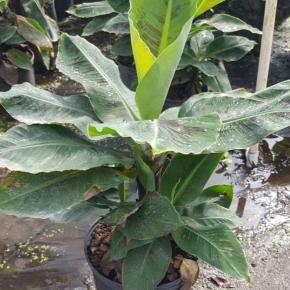
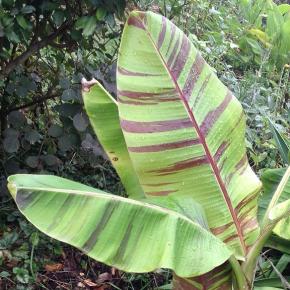
Musa Ensete ventricosum – Large Seed is a striking ornamental banana native to the Ethiopian highlands. Known for its massive paddle-shaped leaves and robust growth, it is a centerpiece plant for tropical-style landscapes. Unlike edible bananas, it produces large, ornamental seeds and is prized for its architectural foliage and impressive height.
|
Packaging
To find out more about our packaging, please visit our young plants' page available from the website header.

|
Available quantity | Dispo à partir de | Sold by | Desired quantity | |
|---|---|---|---|---|---|
|
Le stock n'est actuellement pas disponible pour ce produit. |
|||||
The characteristics of Musa Ensete ventricosum - Large Seed
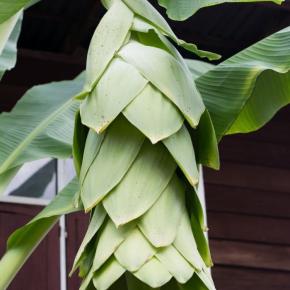
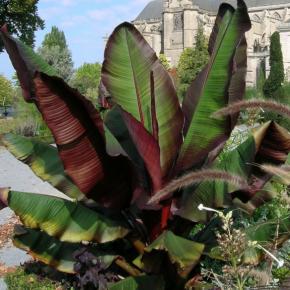
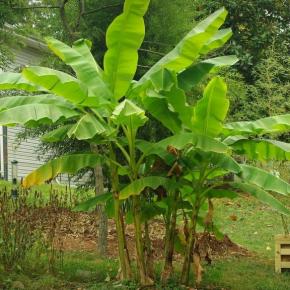
Musa Ensete ventricosum – Large Seed, also known as Abyssinian banana, is a fast-growing, tropical-looking plant forming a dense clump of broad, bright-green leaves atop a thick pseudostem. Native to East Africa, it can reach heights of 6 m in optimal conditions, with a spread of up to 3 m. This species differs from edible bananas by producing large, non-edible seeds and having a single flowering cycle before dying back. Its flowers emerge from a tall, reddish bract, adding exotic flair to the plant’s already impressive architecture.
How to use Musa Ensete ventricosum - Large seed ?
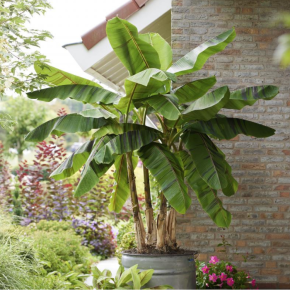
Musa Ensete ventricosum – Large Seed is ideal for creating an instant tropical impact in gardens, patios, and public landscapes. Its dramatic foliage makes it a focal point in mixed borders or as a specimen plant in lawns. In colder regions, it can be grown in large containers and overwintered indoors. It pairs well with bold-leaved companions like cannas or colocasias for a lush, exotic effect. In warmer climates, it can be integrated into tropical-style mass plantings or used as a living windbreak. Due to its size, it is best placed where its vertical presence can be fully appreciated.
Growing advice for Musa Ensete ventricosum - Large seed
Plant Musa Ensete ventricosum – Large Seed in rich, well-drained soil with consistent moisture. Space plants at least 2 m apart to accommodate their mature spread. In cooler zones, plant in spring after frost risk has passed. Provide regular watering during the growing season, avoiding waterlogging. Apply a balanced, nitrogen-rich fertilizer every 2–3 weeks for vigorous growth. Remove dead or damaged leaves to maintain appearance. In frost-prone areas, either dig and store the corm indoors over winter or protect the plant with thick mulch. Optimal growth occurs in warm, humid conditions with protection from strong winds.