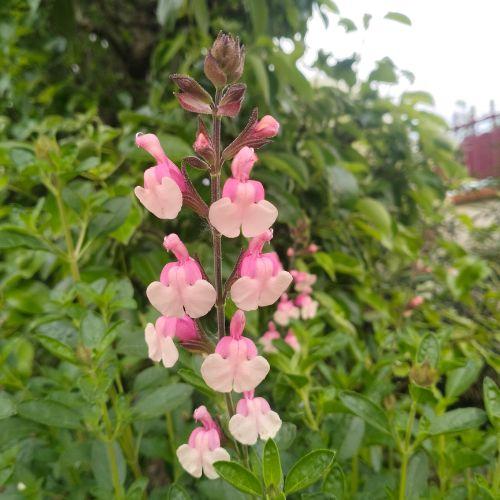
Salvia x Shell Dancer is a semi-evergreen, bushy perennial sage that stands out for its prolonged blooming season and distinctive bicolor pink flowers with soft salmon-pink throats. Its glossy, aromatic foliage and upright habit make it ideal for sunny borders, Mediterranean plantings, and container use. It offers excellent drought tolerance, good cold hardiness, and high ornamental value from spring to frost.
|
Packaging
To find out more about our packaging, please visit our young plants' page available from the website header.

|
Available quantity | Dispo à partir de | Sold by | Desired quantity | |
|---|---|---|---|---|---|
|
Le stock n'est actuellement pas disponible pour ce produit. |
|||||
Characteristics of Salvia x Shell Dancer
Salvia x Shell Dancer is a refined cultivar of shrubby sage, originating from high-altitude Mexican regions. It produces a compact, rounded clump with upright stems and glossy, aromatic leaves. Flowering is abundant and long-lasting, featuring delicate pink corollas with lighter, salmon-toned throats that evolve with temperature and light. This selection thrives in well-drained, even stony or poor soils, and exhibits good drought tolerance once established. Its low maintenance needs and ornamental appeal make it suitable for both professional landscape use and high-impact residential gardens.
How to use Salvia x Shell Dancer ?
Salvia x Shell Dancer is ideal for sunny mixed borders, dry rock gardens, flowering hedges, or terrace containers. Its floriferous nature and elegant habit lend structure and vibrant color to Mediterranean plantings or biodiversity-focused designs. Combine with ornamental grasses, lavenders, or cistus for contrast in both foliage and texture. It is a valuable pollinator plant, attracting bees, bumblebees, and butterflies throughout the flowering season. In urban settings, it performs well in pots and troughs for sunny balconies or rooftops.
Best practices for growing Salvia x Shell Dancer
For optimal growth, install Salvia x Shell Dancer in well-drained, light soils, avoiding heavy, water-retentive substrates, especially in winter. Provide full sun exposure or light, sheltered shade. Space plants 40–70 cm apart depending on design density. In early spring, perform a formative pruning to encourage branching and dense flowering. Water moderately, particularly during establishment and in extended droughts; avoid waterlogging at all costs. A light compost dressing in spring may enhance vigor, but excess nitrogen should be avoided to preserve compact growth and abundant flowering.