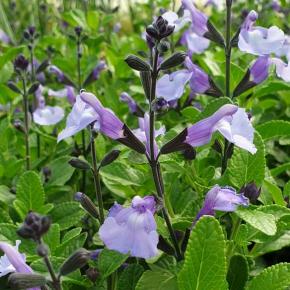
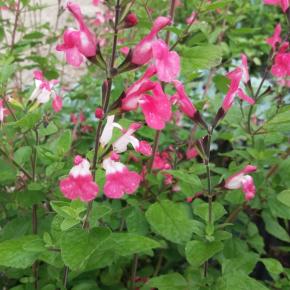
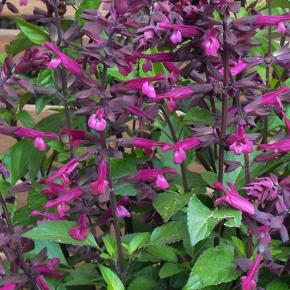
A compact, long-flowering shrub with vivid scarlet red blooms, Salvia Grahamii Rouge stands out for its extended blooming season from spring to autumn. Native to Mexico and Texas, this evergreen subshrub is ideal for dry, sunny locations. Its aromatic foliage and drought tolerance make it a prime choice for Mediterranean-style gardens or low-maintenance borders.
|
Packaging
To find out more about our packaging, please visit our young plants' page available from the website header.

|
Available quantity | Dispo à partir de | Sold by | Desired quantity | |
|---|---|---|---|---|---|
|
Packaging
P77 A5
To find out more about our packaging, please visit our young plants' page available from the website header.
|
Available quantity 770 | Dispo à partir de Immédiat | Sold by 77 |
|
|
|
Packaging
P24 A9
To find out more about our packaging, please visit our young plants' page available from the website header.
|
Available quantity 1314 | Dispo à partir de Immédiat | Sold by 24 |
|
|
|
Packaging
P24 A9
To find out more about our packaging, please visit our young plants' page available from the website header.
|
Available quantity 405 | Dispo à partir de Immédiat | Sold by 24 |
|
|
|
Packaging
P77 A5
To find out more about our packaging, please visit our young plants' page available from the website header.
|
Available quantity 385 | Dispo à partir de Immédiat | Sold by 77 |
|
|
The characteristics of Salvia Grahamii Rouge
Salvia Grahamii Rouge is a compact perennial shrub that delivers continuous flowering over many months, even in hot and dry conditions. Its upright, bushy habit reaches around 80 to 100 cm in height, with an equal spread. The aromatic, semi-evergreen foliage adds sensory interest, while the vivid scarlet red tubular flowers attract pollinators such as bees and hummingbirds. With a hardiness down to -10°C, it suits mild climates and performs best in full sun and well-drained soils.
How to use Salvia Grahamii Rouge ?
Thanks to its dense habit and long blooming period, Salvia Grahamii Rouge is suitable for various landscape uses. It can be planted in open ground as part of mixed borders or Mediterranean-style beds, used in containers for terraces or patios, or integrated into low hedging and informal screens. It pairs well with grasses and other drought-tolerant perennials, offering both structure and vibrant color across seasons.
What are the cultivation tips for Salvia greggii ‘Grahamii Rouge’?
Plant Salvia Grahamii Rouge in light, well-draining soils, ideally in a sunny location. Space plants approximately 60–70 cm apart to allow air circulation. It requires minimal watering once established and benefits from occasional pruning to maintain shape and stimulate flowering. In early spring, a light cutback encourages denser growth. Avoid over-fertilization, which may reduce blooming. A light mulch can help retain moisture and suppress weeds without encouraging excess humidity.