• Homepage
  • SALVIA officinalis Berggarten
Feuillage - SALVIA officinalis Berggarten - LA FORET - Pépinière La Forêt

SALVIA officinalis Berggarten

SAUGE OFFICINALE BERGARTTEN

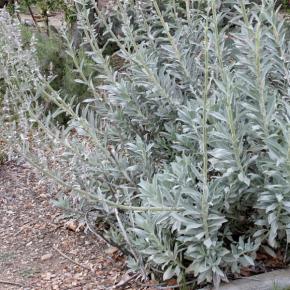
Salvia officinalis Berggarten is a cultivated variety of common sage, selected for its exceptionally broad, rounded, and ornamental foliage with intense aromatic properties. Although less floriferous than the species type, this cultivar stands out for its dense leaf mass, compact rounded habit, and high value in ornamental, kitchen, and medicinal gardens. Drought-tolerant and visually appealing, it is a key feature in both modern and traditional landscape designs.

40 à 60 cm x 50 à 60 cm Rounded, bushy
Evergreen to semi-evergreen in cold climates Light grey-green, broad, thick, and felted
Full sun
from May to July (sparse flowering) Lavender-blue to violet-blue
down to –12 / –15 °C
Packaging
To find out more about our packaging, please visit our young plants' page available from the website header.
Available quantity Dispo à partir de Sold by Desired quantity
Packaging GT9
To find out more about our packaging, please visit our young plants' page available from the website header.
Available quantity 96 Dispo à partir de Immédiat Sold by min 10

Characteristics of Salvia officinalis Berggarten

Originating from a German selection, Salvia officinalis Berggarten is an improved form of common sage cultivated primarily for its foliage. The leaves are broader, more rounded, and more ornamental than the species, with a silvery grey-green tone and high essential oil content. Its compact, rounded growth habit ensures excellent form and structure in the garden. Unlike typical sage, this variety is not heavily floriferous, which helps preserve foliage quality over time. Intensely aromatic, it is widely used in cooking, herbal teas, and ornamental applications.


How to use Salvia officinalis Berggarten ?

Salvia officinalis Berggarten is ideal for use in herb garden borders, dry borders, rock gardens, and large containers on patios or terraces. Its tidy shape and decorative foliage make it suitable for structure planting in edible landscapes or Mediterranean-style gardens. It pairs well with other aromatic perennials such as Lavandula, Thymus, Origanum, or Rosmarinus. This variety is well-suited to low-maintenance planting schemes where drought resistance and visual appeal are essential.


Cultivation guidelines for Salvia officinalis Berggarten

Grow Salvia officinalis Berggarten in well-drained, light soils — sandy or calcareous substrates are preferred. Avoid excess soil moisture, especially during winter. Full sun is essential to ensure dense, aromatic foliage and strong plant form. Space plants 40–50 cm apart to allow full development. Prune lightly after flowering or in early spring to maintain its rounded habit and encourage new growth. Once established, it requires minimal watering. A light mineral mulch can help keep the collar dry. Apply a moderate compost dressing in spring to support growth.


Plantes à découvrir