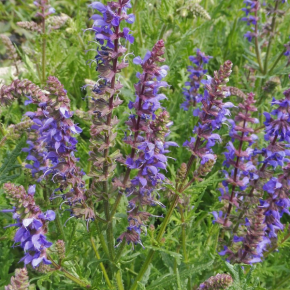
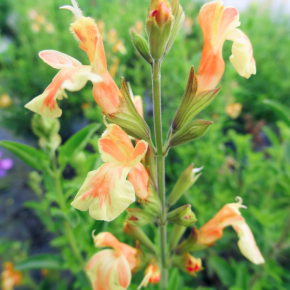
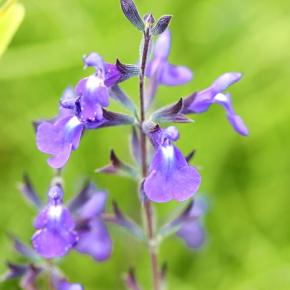
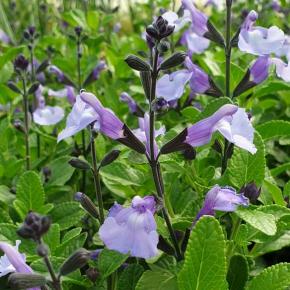
Salvia x Blue Note® is a compact hybrid sage cultivar renowned for its deep royal blue flowers, long blooming season, and finely aromatic semi-evergreen foliage. With its dense, rounded habit and exceptional floral performance, it is perfectly suited to sunny borders, gravel gardens, containers, and drought-tolerant landscape designs. A low-maintenance, high-impact choice for both residential and professional plantings.
|
Packaging
To find out more about our packaging, please visit our young plants' page available from the website header.

|
Available quantity | Dispo à partir de | Sold by | Desired quantity | |
|---|---|---|---|---|---|
|
Packaging
GT9
To find out more about our packaging, please visit our young plants' page available from the website header.
|
Available quantity 200 | Dispo à partir de Immédiat | Sold by min 10 |
|
|
The characteristics of Salvia x Blue Note®
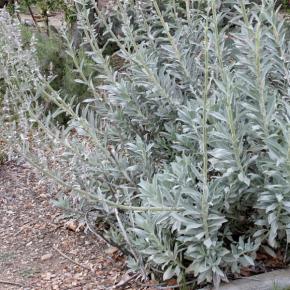
Salvia x Blue Note® is an interspecific hybrid (often placed under genus Salvia, cultivar ’Blue Note’) that produces a compact, bushy shrub with a dense network of upright stems emerging from the base. Its semi‑evergreen foliage remains present most of the year in mild climates, providing structural interest beyond the flowering periods. The leaves are aromatic, medium‑to‑dark green, narrow to ovate depending on growing conditions, and slightly textured — a subtle ornamental asset even when the plant is not in bloom.
Flowering is its major asset: Salvia x Blue Note® produces abundant tubular (greggii‑type) flowers in an intense royal blue / violet‑blue hue. The flowers are arranged on erect, thin stems that rise above the foliage, maximizing visibility and attractiveness for pollinators such as bees, butterflies and other beneficial insects. The bloom starts in late spring (around May–June in temperate climates) and can continue sporadically through summer into autumn — often until the first significant frosts — offering a remarkably long floral display.
Rusticity down to approximately –10 °C combined with a natural adaptation to well‑drained, often lean or gravelly soils — likely inherited from its arid‑native parentage — gives this cultivar a solid tolerance to drought and heat once established.
How to use Salvia x Blue Note®?
Salvia x Blue Note® is extremely versatile in landscape and garden design. Its compact, rounded habit and long bloom make it ideal for massed plantings, where its intense blue flowers can create rhythm and continuity. It also works well as a border or edge plant, defining walkways or flowerbeds without overwhelming neighboring plants. In rock gardens or gravelly Mediterranean‑style settings, its tolerance for well‑drained, lean soils shines — especially in dry, sunny positions.
In addition, it is well‑suited for containers or large pots, which allows use on terraces, patios or urban balconies, bringing color and pollinator interest even in limited space. Its aromatic foliage and persistent structure also make it a candidate for low‑maintenance mixed plantings alongside drought‑tolerant perennials or shrubs, especially in climates with hot, dry summers.
Finally, thanks to its attractiveness to pollinators, Salvia ’Blue Note’ is a good ecological choice for pollinator‑friendly gardens, cottage‑style or naturalistic plantings.
What advice for successful cultivation of Salvia x Blue Note® ?
Choose a site with well‑drained soil — sandy or gravelly soils, even slightly calcareous or poor, are tolerated. Avoid heavy, water‑retentive soil unless amended with gravel or grit to improve drainage. Plant in full sun, though partial shade is acceptable in very hot climates. Spacing around 50–60 cm between plants is recommended to allow full development. Once established, the plant is drought‑tolerant. Water moderately during establishment, then only occasionally — a deep watering during prolonged dry periods will suffice. For container culture, water more regularly (e.g., once per week), but ensure the pot has drainage. The plant does not demand rich soil. A slow‑release balanced fertiliser in early spring can boost flowering intensity, but avoid over‑fertilisation which may reduce bloom quality. Light mulch helps moderate soil temperature and retain moistures in dry climates, but ensure drainability remains good. Remove faded flower spikes regularly to encourage continuous rebloom. In early spring, perform a light pruning or shearing — cutting back stems to just above a green bud helps maintain a compact shape and vigorous flowering. Avoid heavy pruning in late autumn, especially in cold areas, to prevent loss of wood and potential winter damage. With hardiness to –10 °C, the plant generally tolerates mild winters. In colder regions, a light mulch around the base or a protective cover can help safeguard the lower stems in case of severe frost.